More Than a Uniform: Navigating the Complexity of Veteran Mental Health
When a veteran enters a therapy office for the first time, they often find themselves mentally filtering what to share and what is better left unsaid.
For many, the label of veteran carries a specific set of expectations that can feel like a second uniform—one that is sometimes just as restrictive as the first.
There is a common assumption among civilians, and even some clinicians, that veteran mental health is a singular conversation about combat trauma and post-traumatic stress disorder (PTSD). While those experiences are profoundly real for many, they represent only one part of a much broader and more intricate internal landscape.
The Narrative of the Monolithic Experience
Something I observed during my time at the Military and Veterans Crisis Line—first as a crisis intervention specialist, and later as a clinical operations supervisor—was how often veterans felt the need to justify their distress. Many people who have served carry an internal hierarchy of suffering. They may feel that because they were never in an active war zone, or because they served in a support capacity rather than a combat role, their mental health symptoms are less valid. I often hear clients say they feel they are taking up space that belongs to someone who “really saw something.”
This internal gatekeeping is one of the primary barriers to seeking care. It partially stems from a belief—or fear—that military service is the only defining event in a veteran’s life. In reality, many veterans seek therapy for issues that predate their relationship with the military. Relational trauma from childhood, long-standing patterns of anxiety, or family dynamics often follow a person into the service and remain long after they have discharged.
When PTSD Isn’t About Combat
It is common for a veteran to experience PTSD from events that occurred within the military but outside of combat, or from events that happened before they ever stepped into a recruiting office. The patterns of challenge we face as humans are rarely attributable to a single moment in time. Instead, they are typically a collection of experiences that build on and reinforce one another over the course of a life.
Common misconceptions about veteran trauma often include:
The belief that PTSD only results from being “outside the wire” or in active combat.
An assumption that childhood trauma is erased or made irrelevant by military service.
The idea that a veteran’s primary identity is defined solely by their MOS or rank.
A misunderstanding that symptoms like hypervigilance are only related to tactical training.
The Lingering Effects of Military Socialization
The military is a highly effective mechanism of socialization. From the moment someone enters boot camp or a military academy, they are being shaped to think, behave, and perceive the world in a very specific way. This process is necessary for survival and mission success, but it creates a psychological framework that does not simply disappear upon separation from service.
Even years after leaving the military, many veterans find themselves still operating under the rules of their training. They may hold themselves with a certain rigidity, struggle with the perceived lack of discipline in civilian spaces, or find it difficult to relate to their own internal emotions. This affects how they choose their friends, how they parent, and even how they navigate a grocery store.
The Conflicting Relationship with Service
It is common for veterans to have deeply conflicting feelings about their time in the military. I frequently sit with clients who feel an intense sense of pride in their service and the bonds they formed, while simultaneously carrying immense shame or resentment toward the institution.
This duality can be confusing. One part of a person may look back on the camaraderie and the sense of purpose as the best years of their life, while another carries the weight of a moral injury—the deep distress that follows witnessing, failing to prevent, or participating in actions that violated one’s core sense of right and wrong. Understanding that these two truths can exist at the same time is essential. A therapist who is familiar with this specific cultural context can help the client integrate these disparate parts of their history.
A Range of Approaches to Trauma
PTSD in the veteran community has been found to be highly treatable through several well-established approaches. For a long time, the standard of care has been centered on manualized treatments like Cognitive Processing Therapy (CPT) and Prolonged Exposure (PE). CPT focuses on identifying and shifting the stuck points in a person’s thinking, while PE involves gradually facing the memories and situations that have been avoided since the trauma occurred.
Another primary approach is Eye Movement Desensitization and Reprocessing (EMDR), which is designed to help the brain resume its natural healing process by processing traumatic memories so they no longer feel “live” or intrusive. While I am formally trained in EMDR, I’ve found that the journey of healing from military service often requires a broader set of tools than any one modality can provide.

Emerging and Integrated Frameworks
While the frontline treatments mentioned above are effective for many, they can sometimes feel overly clinical or rigid for others. In my practice at the Lantern Room, I primarily use approaches like Internal Family Systems (IFS) and Acceptance and Commitment Therapy (ACT). These are often considered “promising” or “emerging” in the context of veteran care, increasingly recognized for their ability to address the whole person rather than just a set of symptoms (also known as holistic approaches).
ACT focuses on building psychological flexibility to help you move toward a meaningful life even when difficult thoughts and feelings are present.
IFS focuses on the internal ecosystem of “parts” we all carry—some that act as protectors to manage our daily lives and others that carry the pain or shame we’ve had to wall off. Therapy involves helping these internal protectors realize they no longer have to work quite so hard, allowing the parts of you that were sidelined or wounded to finally be seen and unburdened.
Beyond these, there are other emerging interventions gaining traction such as Somatic Experiencing, which focuses on the body’s physical release of trauma, and Accelerated Resolution Therapy (ART).
The choice of approach often depends on what feels most accessible to you:
Traditional “top-down” approaches like CPT that start with the “thinking” brain, using logic and perspective to change how you feel about what happened.
Memory-focused work like EMDR to reduce the emotional charge of specific events.
“Parts-based” work like IFS to address the internal tension between parts that still operate in high-stakes survival modes and the vulnerable parts of you that have been sidelined or protected for years.
Values-based frameworks like ACT that prioritize how you want to live your life right now.
Somatic or body-based therapies that address the physical sensations and reflexes linked to trauma.
The goal is not to find the “perfect” modality, but to find the one that helps you feel most understood and capable of moving forward. Regardless of the specific method, the source of a veteran’s trauma is not always what people expect; healing often involves looking at the entire arc of a life, not just the time spent in uniform.
The Role of Internal Parts in Navigating the World
From an IFS perspective, we can see the behaviors and coping mechanisms developed in the military as parts of the self that learned specific lessons about survival. These parts often adopt behavioral strategies to navigate a world that felt dangerous, unpredictable, or demanding. If a strategy works—if it keeps the person safe or successful in a high-stress environment—that part of the person will keep doing it.
We often see certain parts show up in veteran clients, such as:
A "stoic part" that suppresses all emotion to ensure the mission can continue without distraction.
A "sentinel part" that remains in a constant state of hypervigilance, scanning for threats even in safe civilian environments.
A "taskmaster" part that demands perfection and has no patience for "weakness" or slow progress.
"Exiles"—parts that carry the deep pain or shame that was too heavy to process while in uniform.
The challenge is that these strategies often continue long after they are necessary or effective. The stoic part that helped a soldier survive a deployment can become the very thing that prevents them from connecting with their spouse or children years later. Therapy often involves helping these parts realize they are no longer in a deployment phase of life and that it is safe to try a different approach.
Values and the Mission Beyond Service
ACT often resonates with veterans because it mirrors the mission-driven nature of military life. In the service, your actions are rarely dictated by how you feel in the moment; they are dictated by the mission, the unit, and a set of core values like loyalty and duty. ACT operates on a similar principle, shifting the focus away from trying to fix or eliminate difficult thoughts and toward “committed action” in service of what matters most to you.
For many, this feels familiar. It is about deciding what you want your life to be about and staying committed to that direction, even on the days when your symptoms or memories are making it difficult to function.
However, the transition from military discipline to psychological flexibility—the core goal of ACT—can sometimes feel like a contradiction. Military socialization often prizes a certain kind of rigidity. You are trained to suppress fear, exhaustion, and doubt to ensure the job gets done. This emotional compartmentalization is a survival skill in a combat zone, but it can become a liability in civilian life. When a veteran hears the word “flexibility,” it can sound like “softness” or a lack of discipline. In a clinical setting, we often have to reframe this: Flexibility isn't about losing your edge, but about having a wider range of responses so you don't get stuck in a single, defensive mode of being.
In practice, using ACT with veterans often involves:
Breaking down “committed action” into the daily habits and specific choices that align with the direction you want your life to go.
Recognizing that emotional suppression is a tactical tool for a high-stakes environment that can become a barrier to a meaningful life at home.
Identifying core values—global qualities like reliability, compassion, or integrity—that guide how you want to show up in every area of your life, from your career to your closest relationships.
-Learning to notice internal noise (like hypervigilance, intrusive memories, or self-criticism) without allowing those sensations to dictate how you spend your day.
The strength of ACT is that it doesn't ask you to stop being a warrior or to discard the values that made you successful in the military; it asks you to apply that same level of commitment to your internal life. We work on the idea that you can carry the weight of your experiences and still move toward the life you want to lead. While you can’t always control the terrain you’re walking on, you can always choose the direction in which you’re headed.
The Diversity of the Veteran Experience
There is a persistent image of what a veteran looks like, how they vote, and what they believe. In reality, the veteran community represents an increasingly diverse cross-section of America, spanning every ethnic, religious, and political background. It also includes a vast array of gender identities and sexual orientations. For many, their time in the military was defined by the tension between their personal identity and the real or perceived norm of the institution.
I have worked with many veterans who spent years hiding fundamental parts of themselves to fit into a rigid culture. This constant masking requires an enormous amount of psychological energy. When someone has had to suppress their identity to ensure their safety or professional standing, the transition to civilian life can be disorienting. They may find themselves wondering who they actually are once the external pressure to conform is removed.
Identity and the Pressure to Conform
For some, the trauma they carry isn't from an external enemy, but from the culture of the military itself. This can include being treated poorly for one’s identity or the experience of being forcibly discharged under previous policies. These experiences often lead to a profound sense of isolation, as the person may feel they don't quite fit into veteran spaces, yet they still carry the specific cultural markers of military service that make it hard to relate to lifelong civilians.
This sense of "not belonging" often manifests as:
Avoiding veteran service organizations because of past discrimination.
Feeling like an outsider in both military and civilian social circles.
Hesitation to disclose veteran status in therapy for fear of being stereotyped.
Difficulty reconciling a love for service with the pain caused by institutional policies.
The Complexity of Military Sexual Trauma
One of the most difficult and often silenced aspects of veteran mental health is military sexual trauma (MST). This includes any sexual assault or repeated, threatening sexual harassment that occurred during a person’s service. MST is not a diagnosis in itself, but an experience that can lead to PTSD, depression, and significant challenges with trust and intimacy.
The shame associated with MST is often compounded by the military’s emphasis on strength and self-reliance. When this happens to men, it can tap into additional layers of shame regarding traditional concepts of masculinity. Many survivors feel that seeking help is a betrayal of their unit or that they will be blamed for what happened. In many cases, the trauma is worsened by the institutional response—or lack thereof—when a report is made.
Betrayal Trauma and Confidentiality Concerns
A unique hurdle for veterans in therapy is a deeply ingrained wariness toward healthcare providers. In the military, confidentiality is not absolute. Providers are sometimes compelled to report certain information to a client’s command, which can have immediate and significant consequences for a person’s career and standing. This creates a “dual loyalty” conflict where the provider is serving both the patient and the institution.
When veterans move into private practice therapy, they often carry this suspicion with them, and understandably so. They may wait weeks or months before sharing the most sensitive parts of their history. Part of the work in a clinical setting is rebuilding that sense of safety and clarifying that, in a civilian context, the client’s privacy is held with a much higher degree of protection.
The Challenge of Reacclimation and the VA System

The transition from military to civilian life is rarely a single event. It is a long, slow process of reacclimation that can be as disruptive as a deployment itself. There is often a profound sense of distance from those who have not served. Veterans may find civilian life to be frustratingly disorganized, “soft,” or lacking in the clear-cut purpose they grew accustomed to in the service.
This transition is often complicated by the administrative burden of seeking care through the U.S. Department of Veterans Affairs. Navigating claims for physical or mental health issues is frequently described by clients as an exhausting, “second job” that requires them to repeatedly prove their trauma to strangers.
The process of seeking benefits or medical coverage often triggers:
Feelings of being "unseen" or dismissed by a large bureaucracy.
Resentment over the length of time it takes to receive necessary support.
Anxiety about having to relive traumatic events for the sake of a claim.
A sense of guilt for “taking money” from the government, even when the benefits are clearly earned.
Strength, Fortitude, and Barriers to Care
The military cultural norm of inner and outer strength is a double-edged sword. While it fosters incredible resilience, it also creates a significant amount of shame around the act of admitting a need for help. Many veterans view seeking therapy as a failure of fortitude. They may wait until a crisis—a struggling marriage, a job loss, or a health scare—before they finally reach out.
In our work together, we often discuss the idea that true fortitude includes the ability to face one's internal world with the same courage they applied to their external duties. Seeking therapy isn't about being broken, but acknowledging that the tools used to survive a high-stress career are not always the tools needed to thrive in a peaceful life.
A Path Toward Integration
Therapy for veterans is about more than just reducing painful symptoms. It is about integration—bringing together the parts of oneself that served, the parts that were hurt, and the parts that are ready to move into a new chapter. Whether we are using ACT to help you reconnect with the values that guide your life now or IFS to address the internal tension between survival-focused parts and the parts of you that long for connection and presence, the goal is to help you feel more at home in your own skin.
You may have spent years feeling like you have to navigate these complexities on your own. It can be a relief to speak with someone who understands the specific cultural nuances of service without requiring you to translate your experience.
Shifting away from the survival habits that once kept you safe is a slow and often disorienting process. It can feel strange to navigate your current life without the same rigid defenses you relied on for years. However, addressing these patterns is what eventually allows for a way of living that is based on your current reality rather than the requirements of a previous chapter.
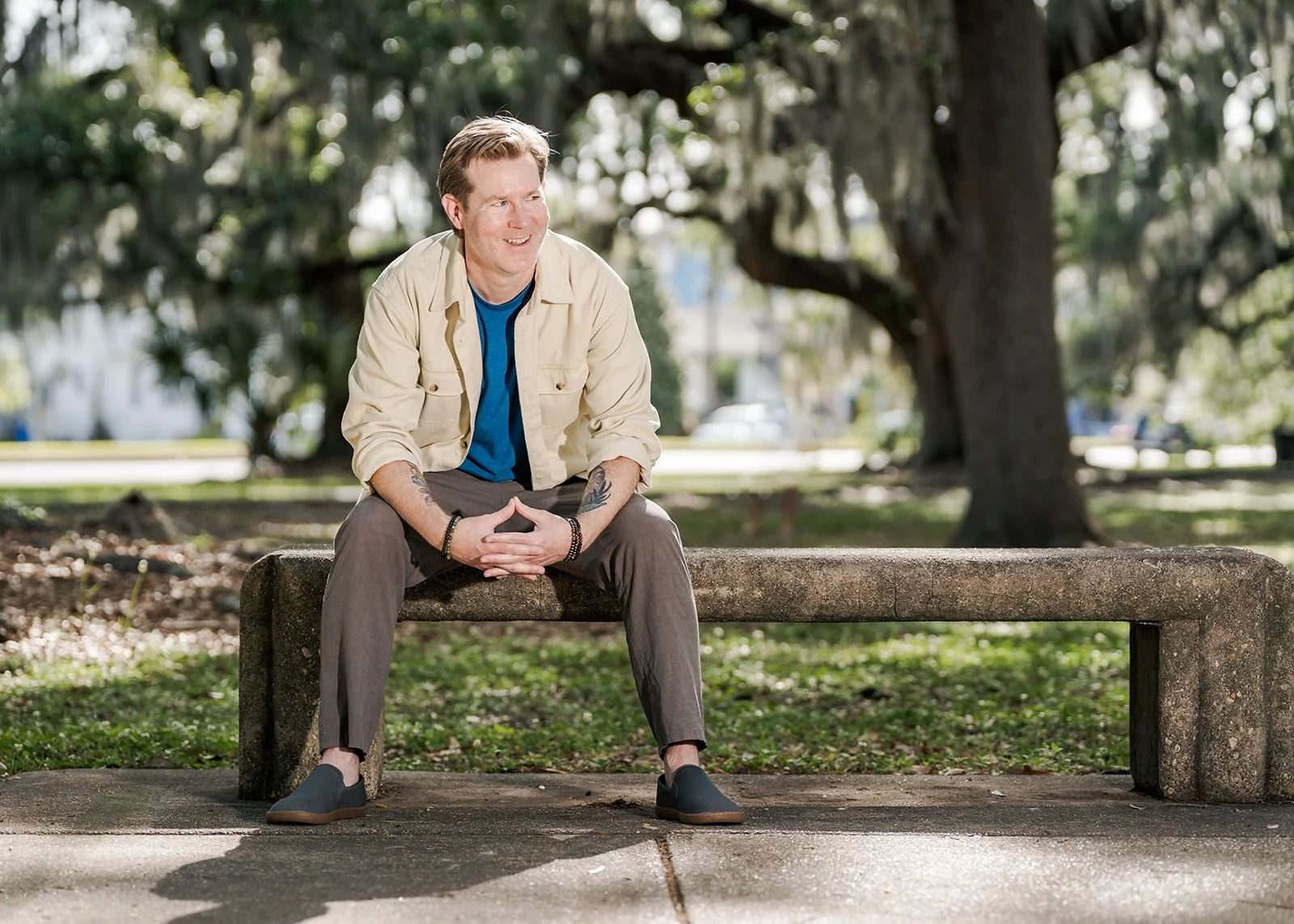
Powell is a therapist who offers individual therapy for adults in Georgia, California, Colorado and Florida.
He offers individual therapy, but also specializes in Gender Identity, Life Transitions, and Self-Worth.